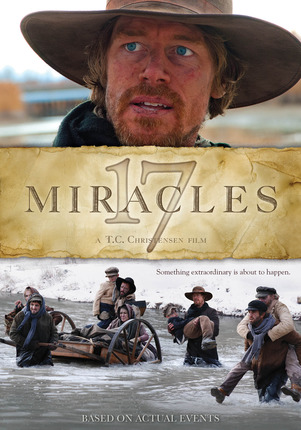
I enjoyed the movie as it reinforced for me the faith and devotion of the saints of the Willie handcart company. But I was troubled by it, too.
The movie’s protagonist is Levi Savage, a widower who became a sub-captain in the handcart company en route home from a 3-year mission to Siam. Levi is portrayed as faithful and strong, just the kind of man you’d like leading your company. He is also the one who recommended that the saint not leave for the west because of the lateness of the season.
His public opposition, portrayed as being sought by Captain Willie, was then repudiated by Willie, as well.
I don’t take issue with Savage’s opposition to leaving, nor with Willie’s encouragement to go. I presume each man operated out of his conviction. But the film does not give me that foundation. By the time this incident occurs in the film, we like Savage. We’ve seen his service in the Mormon Battalion, his loss of his wife, his mission call to Siam and his reluctant acceptance of the role as sub-captain. We like him. We trust him. We want him to lead us on a handcart trek.
We don’t know Willie at all. We only know he’s called Savage and Savage accepted. And we hear him denounce Savage publicly. We see nothing of Willie’s spiritual commitment, only his slavish obedience to his orders to deliver the company.
Later in the film, Savage is publicly reprimanded in another meeting by a visiting authority. Savage instantly recants his opposition and submits, once again, to the authority at hand. (And just in case we miss it, an end note among the credits reminds us again how wonderful it is that Levi Savage submitted after this public calling out.) As a viewer of the film (and knowing the outcome of the story), it’s very easy for me to side with Savage and assume Willie and the visiting authority are wrong and, even worse, uninspired. We watch members of the company suffer and die; those who do not die bear significant physical and emotional burdens. Yes, miracles occur, but at what cost?
I suspect life was more complicated, and I wish I had seen more of it in the film. I suspect Willie’s conviction was real, and I would have liked to have seen more of his own spiritual struggle.
I have never faced physical trials like those of the handcart companies, thank Heavens! But I have faced trials and the ambivalence that accompanies them. I have found myself having to choose between seemingly impossible alternatives. I have sought divine guidance and sometimes received it quickly and other times not. I have been questioned by doubters.
Life is complicated. And I applaud the film for showing some of the complexity that Levi Savage had to live with. But I would have preferred to see Willie’s complexity, as well.
I do not quibble about the miracles (though I could not count them). I acknowledge that miracles occur (though my teenage son watching with me did not; he kept looking for coincidences). And they still occur in my life and in the life of those I love (even if they do not see them).
I also know that most church leaders I know, especially those at the retail level in wards and branches, devote a great effort to seeking and understanding the Lord’s will. They may get it wrong sometimes, but they are trying to do the best they can with what they have. My role is to follow them as best I can, and, more importantly, to love them as best I can – that is, to love them with that Christlike love that is charity, a love that motivates me to see the best in them and to do what I can to lighten their load, to share their vision and to follow their lead.
