Showing posts with label Sustaining. Show all posts

Tuesday, January 29, 2013

An issue with the miracles

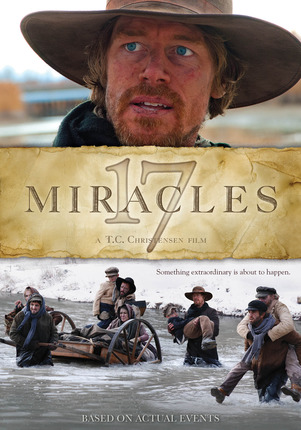
We finally watched 17 Miracles last week. I had not seen it before, though I certainly had heard some of the stories told in the film.

I enjoyed the movie as it reinforced for me the faith and devotion of the saints of the Willie handcart company. But I was troubled by it, too.

The movie’s protagonist is Levi Savage, a widower who became a sub-captain in the handcart company en route home from a 3-year mission to Siam. Levi is portrayed as faithful and strong, just the kind of man you’d like leading your company. He is also the one who recommended that the saint not leave for the west because of the lateness of the season.

His public opposition, portrayed as being sought by Captain Willie, was then repudiated by Willie, as well.

I don’t take issue with Savage’s opposition to leaving, nor with Willie’s encouragement to go. I presume each man operated out of his conviction. But the film does not give me that foundation. By the time this incident occurs in the film, we like Savage. We’ve seen his service in the Mormon Battalion, his loss of his wife, his mission call to Siam and his reluctant acceptance of the role as sub-captain. We like him. We trust him. We want him to lead us on a handcart trek.

We don’t know Willie at all. We only know he’s called Savage and Savage accepted. And we hear him denounce Savage publicly. We see nothing of Willie’s spiritual commitment, only his slavish obedience to his orders to deliver the company.

Later in the film, Savage is publicly reprimanded in another meeting by a visiting authority. Savage instantly recants his opposition and submits, once again, to the authority at hand. (And just in case we miss it, an end note among the credits reminds us again how wonderful it is that Levi Savage submitted after this public calling out.) As a viewer of the film (and knowing the outcome of the story), it’s very easy for me to side with Savage and assume Willie and the visiting authority are wrong and, even worse, uninspired. We watch members of the company suffer and die; those who do not die bear significant physical and emotional burdens. Yes, miracles occur, but at what cost?

I suspect life was more complicated, and I wish I had seen more of it in the film. I suspect Willie’s conviction was real, and I would have liked to have seen more of his own spiritual struggle.

I have never faced physical trials like those of the handcart companies, thank Heavens! But I have faced trials and the ambivalence that accompanies them. I have found myself having to choose between seemingly impossible alternatives. I have sought divine guidance and sometimes received it quickly and other times not. I have been questioned by doubters.

Life is complicated. And I applaud the film for showing some of the complexity that Levi Savage had to live with. But I would have preferred to see Willie’s complexity, as well.

I do not quibble about the miracles (though I could not count them). I acknowledge that miracles occur (though my teenage son watching with me did not; he kept looking for coincidences). And they still occur in my life and in the life of those I love (even if they do not see them).

I also know that most church leaders I know, especially those at the retail level in wards and branches, devote a great effort to seeking and understanding the Lord’s will. They may get it wrong sometimes, but they are trying to do the best they can with what they have. My role is to follow them as best I can, and, more importantly, to love them as best I can – that is, to love them with that Christlike love that is charity, a love that motivates me to see the best in them and to do what I can to lighten their load, to share their vision and to follow their lead.


Thursday, January 24, 2013

A New Bishop

It was an eventful weekend in my ward. Not only did we have ward conference, a favorite meeting for me because I love to be taught by my bishop and stake president, but our good bishop was released, together with his counselors.

I felt an unusual tenderness that day. Part of it is knowing a bit how the newly released bishop feels, having been there twice myself. The closeness one feels to his counselors and to ward members changes with the release in a way that is difficult to describe. The passing of the mantle of bishop is very real, and being without it is something one has to get used to.

Part of it is the release of this particular bishop – a man we’ve known for years. He served as ward clerk when I was bishop. Our sons have been in the same classes in church for fourteen years. His wife has taught our daughters piano. They are good friends of ours. And he was an awesome bishop. He humbly faced his responsibilities as bishop and worked tirelessly to meet the needs of the members of his ward.

All bishops work harder than anyone realizes. Even harder than they themselves realize. I can remember hearing him talk about meetings and visits and service and phone calls from a particular weekend and thinking, “How could one person do all that?” And then realizing that I’d done the same thing when I sat in that chair. Just as any bishop would. And every bishop does.

No, he wasn’t perfect, I suppose. But don’t ask me how. I could not tell you. What I do know is he was a humble servant of the Lord and servant to our ward. He was firm in his testimony, firm in his command of the gospel and its principles, firm in defense of truth, and firm in his leadership. At the same time, he was kind and compassionate. When I served on the ward council with him for a time, I observed that he actively sought the views of all the council members. He regularly led out praising ward members for the good work they did.

We live in one of those wards with lots of leadership experience and potential. I have joked that you can’t swing a dead cat in our ward without hitting an ex-bishop, and it’s true. Our ward contributes its membership to many stake callings, as well. I’m sure that there are probably many men who could serve as bishop.

I’m glad to know our stake president is careful enough to listen for whom the Lord has called to serve as our new bishop. As soon as his name was read, it was easy to see the Lord’s hand in his call. He will certainly be different from our former bishop, and that is just how it should be – different gifts for different times. But there is no doubt in my mind that he also will serve faithfully and carefully. He is thoughtful, prayerful and faithful. He’s also a friend, and our home teacher (or was, anyway; I suppose maybe that will change).

Of course these changes are now well institutionalized in the church. We have processes to follow, forms to file, permissions to receive. And still I know that at the heart of that effort is the revelation to properly authorized servants to call others to serve. And I’m grateful for that organization, and for the service that results from it.

By the way, if you like, you can check out my latest post at Real Intent, "In the Tunnel" here.

Monday, May 7, 2012

Sustaining my teachers

I wrote recently about sitting on my hands (here and here). One of my reasons for that post was to renew my support of my gospel teachers at church. I raised my hand to sustain them, and I want to continue to sustain them.

But what can we do when we have a teacher who is sub-par (or who just bores us)? We don’t all respond to the same kind of teacher, I’m sure, so there are likely times when the person in front of the room isn’t our favorite.

Here are things I hope class members will do for me when I teach:

1. Prepare to come to class – read the lesson and come ready to learn something. It may not be from the teacher, but from another class member, or even just from quiet reflection on what has been said. But I hope students come to my class prepared to learn. (And yes, that also means bringing a set of scriptures (I don’t care what form!) and a copy of the lesson manual. Extra points if I’m teaching one of those Teaching for Our Times lessons and someone brings a copy of the conference talk! (Personally, I never know what talk we’re discussing until I show up; somehow it doesn’t get communicated very well in our ward. But at least now that I use my Kindle Fire at church, I can find whatever conference talk is under discussion.)

2. Volunteer to read and comment – there’s nothing worse for a teacher than inviting volunteers to participate and hearing crickets in response. Ok, it may be a lame question, but maybe your insight will drive the discussion in a positive direction. There’s one fellow in my ward who is particularly good at this – I love having him in class when I teach because I know he’ll say something cool.

3. Ask thoughtful questions – if the lesson is lagging or if there’s a question you brought to class hoping for an answer and it doesn’t look like you’re going to get it, ask the question. The worst that will happen is that you’ll get a blank stare. But the question might lead to an interesting and fruitful discussion. I’ve done this sometimes and had a fellow class member button-hole me after class for an extended discussion about my question.

4. Teach yourself the lesson you’d like to hear – if all else fails, you can always teach yourself the lesson while you sit in the classroom. Elder Eyring told a story a few years back about his dad’s doing this in sacrament meeting if a talk got a little on the dull side. I prefer to wait a while before leaping to this conclusion because if I’m teaching myself in my head, I probably won’t hear what others are saying in the discussion, and so I won’t learn anything from them.

I believe there’s value in showing up prepared for a class. It benefits me as a student and it also benefits the teacher. But sometimes there is a teacher we just don’t get much from. Hopefully that teacher isn’t instructing every week, and hopefully that teacher can get some in-service training. But even if he or she can’t, we can still sustain him or her by being present and ready to learn.

Some teachers do get better over time. I have a friend who taught a class I used to attend regularly. Initially I wasn’t all that thrilled going when he taught. But over time he introduced innovations to his lesson – he sought out information in other church publications to supplement what he was getting out of the shared manual; he did a better job of leading class discussions instead of reading from the manual; he became more confident in his own ability to teach. It was fun to watch the change in him, and it became fun to attend his class.

King Benjamin’s remedy for our earthly state seems to apply in this case, as well. If we are “submissive, meek, humble, patient, full of love” (Mosiah 3:19), we are more likely to be accepting of our teachers who might not be our favorites, and we might learn something along the way.


Monday, June 14, 2010

Whom do I trust?

"We believe in the same organization that existed in the primitive church, namely apostles, prophets, pastors, teachers, evangelists and so forth." (Articles of Faith 1:6)

Faithful Latter-day Saints sustain members of the First Presidency and the Quorum of the Twelve Apostles as prophets, seers and revelators. As such, we strive to follow these men when they lead us in their ecclesiastical capacity, believing that they speak for the Lord in guiding His church.

That said, we know they are not infallible, and we know from history that sometimes they are wrong, or their decisions are reversed by later church administrations.

One wonders then, what am I to do when I hear a prophet speak? How do I know he speaks for the Lord? How do I reconcile what someone else said that was apparently not speaking for the Lord (because it has been shown to be incorrect or it has been changed by later prophets)?

I respect that this question is not an easy one for many people. It may cause some to look at each pronouncement from the brethren wondering if it is also wrong or temporary. Others take a different approach, choosing to focus on the words of today's prophets without considering historical issues, thereby avoiding the conflict.

For years mine was the latter approach, largely out of my own lack of awareness of church history. More recently I've read more (and there's been more to read). But I still am comfortable taking the approach of trusting today's prophets when they speak.

I can do this for several reasons.

First, my testimony has come in stages in my life. I suppose my first testimony was of the Savior, that He lives and loves me. And that probably pre-dates my joining the church with my family when I was a child, and has grown over time. My second testimony was a general sense that the church is true, and it came quite early in my life (around age 10), largely because of feelings I had when I was baptized and then later when I was sealed to my parents.

Later I gained a specific testimony of the Book of Mormon, and of the restoration of the church. My testimony of Joseph Smith as a prophet has come also in bits and pieces along the way. The truth of the Book of Mormon contributed to it. The peace that I feel in the temple contributes to it. My own experiences with priesthood blessings contribute to it. And my study over the years has contributed, as well.

As for the present prophets (the First Presidency and Quorum of the Twelve), my testimony is strengthened as I raise my hand to sustain them, as I hear their words in conferences and read them, as well, and mostly as I follow their counsel. It comes as the Spirit bears witness to me in quiet moments of prayer and contemplation.

Second, when I have followed their counsel in the past, I have felt the Lord's blessing in my life. There are specific decisions I've made based on specific counsel from the prophets over time. Those choices have not led me astray and in fact have worked to my benefit.

That I sustain them does not mean that I understand or even accept every word each of them says. There are some issues that I still sort through over time. But still I can accept them as inspired men, called of God to do the work they do. And I am confident that as I follow their counsel I will be blessed. And if there are some questions I have about what one or another of them teaches, I can put that on the shelf for the time being. My experience has taught me that those things resolve themselves in time.

I am grateful we live in a time of prophets.

Tuesday, May 25, 2010

Sustaining my Wife

There's been a discussion of sustaining over at the By Common Consent blog, and its ramifications on church government. Though interesting to me, my most recent experience is more personal, and demonstrates the great opportunity that the act of sustaining someone to a calling has given me through the years, namely the chance to receive a confirming witness of the divinity of a particular call.

My wife was sustained to a new calling in our stake conference last Sunday. I had been there as the stake president issued the call. She and I had spoken in hushed tones over the two weeks between her receiving the call and being sustained. She told me of plans to meet with the women she'd serve with after they'd been sustained. I knew in all of this that she was well prepared and well suited to the calling she'd received, and I was glad for her to have this opportunity to serve and to bless others. I'd also had plenty of opportunities to feel the spirit as it related to her call. But I sensed this was her calling, and I didn't really need that spiritual witness.

Well it did come as her name was called in stake conference together with the other women with whom she'll serve, and as I raised my hand to sustain them. And that witness was sweet and gentle and clear. We weren't seated together at that moment (I was singing in the choir, and she was accompanying the choir on the piano), but she later reported she'd felt the same witness.

This isn't the first time that my act of sustaining -- which to me is a covenant to sustain -- has been supported by a spiritual witness. It has happened (sometimes) as I've sustained general authorities in general conference (even when the conference I'm participating in was half a world and and a week away from the original broadcast). It has happened as I've sustained my own counselors in a bishopric. It has happened as I've sustained my own local leaders as they've been called.

There may be many reasons for the sustaining vote in our meetings. One of them for me is the chance to feel again that spiritual witness that callings do come from the Lord.